
Medina Concrete pours concrete slabs and foundations in Powder Springs, GA and across west metro Atlanta. That covers small pads for a shed, an AC unit or a hot tub; slab floors for garages, workshops and pole barns; footings for walls, porches and additions; and basement foundations formed with a vapor barrier and plumbing in place before the pour. Owner Francisco Medina does every estimate himself.
A slab is the part of a building nobody looks at once the walls are up, and the part that is hardest to fix if it goes wrong. It has to be level, the right thickness, reinforced for what will sit on it, and set on ground that will not move. On Georgia red clay, that last part takes real attention, because the clay swells when wet and shrinks when dry.
If you are working with a builder or have drawings for a garage, barn or addition, bring them to the estimate. The plans set the thickness, footing size and steel, and we price the concrete work to match.
Slabs, Pads and Foundations We Pour
Shed, equipment and hot tub pads
A small concrete pad gives a shed, generator, AC unit or hot tub a flat, solid base that will not rot or sink like blocks on dirt. Pads are a quick pour, but they still need to be level, sit on compacted gravel and be thick enough for the load. A filled hot tub is far heavier than it looks.
Garage, barn and shop floors
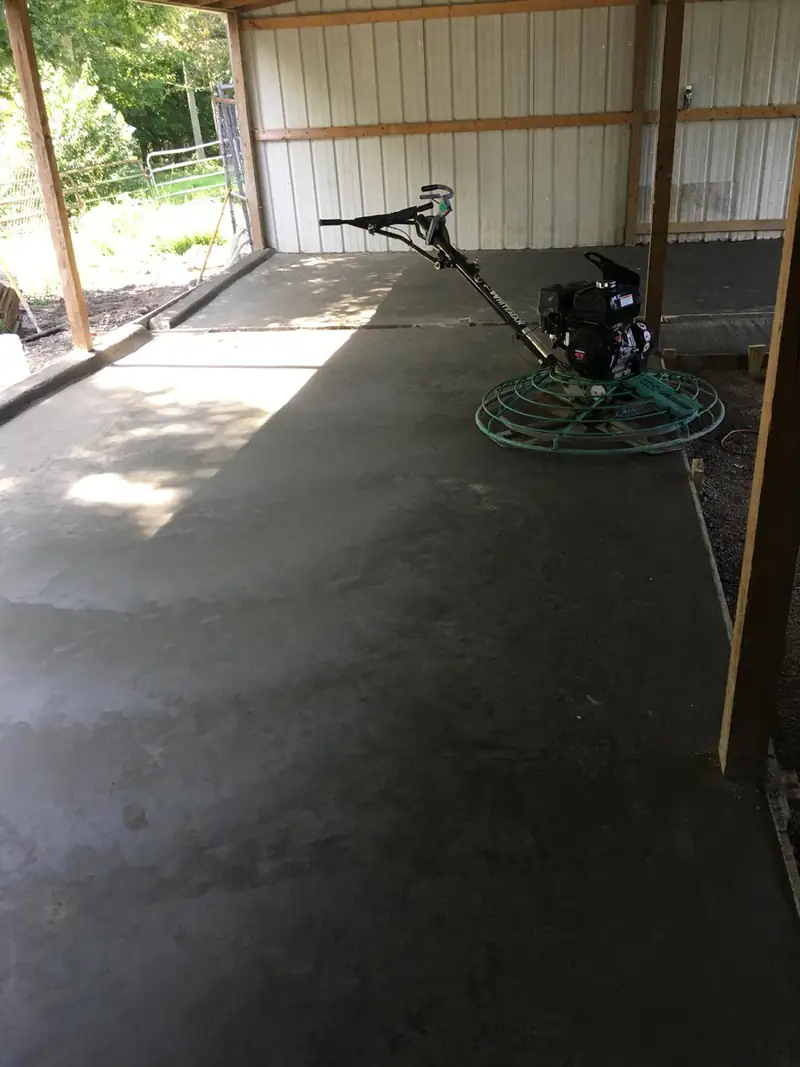
Floor slabs for detached garages, workshops and pole barns are poured inside or before the building and finished smooth with a power trowel, so you get a hard, flat surface that is easy to sweep and roll equipment across. Where vehicles, a lift or heavy tools will sit, the slab is made thicker and reinforced to suit.
Footings
Footings are the wider concrete base under a wall, a porch, a set of columns or an addition. They spread the load into firm soil below the topsoil. We dig, form and pour footings for block walls, porches and framed structures, sized to the plans or the load.
Basement foundations and building slabs
For a basement or a slab-on-grade building, the work starts well before the concrete truck. The ground is excavated and graded, a gravel base is placed and compacted, the forms go in, a vapor barrier is laid to keep ground moisture from coming up through the slab, plumbing is stubbed through, and the steel is set. Only then is it poured.
What Goes Into a Good Slab
- Firm, level ground. Topsoil, roots and soft clay come out. The subgrade is graded and compacted.
- Gravel base. A compacted layer of crushed stone gives even support and lets water drain from under the slab.
- Vapor barrier where it matters. Under any floor inside a building, a plastic barrier keeps moisture from wicking up into the space.
- Reinforcement. A rebar grid or wire mesh, held up off the ground so it ends up inside the concrete, not under it.
- The right thickness. Around four inches is common for light-use pads and floors; garage, shop and barn floors that carry vehicles or equipment are typically poured thicker. Your plans or the load decide it.
- Joints and finish. Control joints keep shrinkage cracks in straight lines, and the surface is finished for the use: power troweled smooth inside, broom finished outside.
- Curing. In Georgia summer heat a slab is kept damp or covered early so the surface does not dry and crack before the concrete underneath has gained strength.
Slabs as Part of a Bigger Project
A lot of slab work happens alongside other jobs. A porch or garage often needs both the slab and the framing above it, and a building on a sloped lot may need a retaining wall to make room for it. And a new garage slab usually needs a driveway to reach it. When the concrete is planned with the rest of the job, the grades and drainage line up.
Repair or Replace a Slab?
Hairline cracks in a slab are normal and usually only cosmetic. A slab that has sunk, tilted, broken into pieces or has water coming up through it is a different story, since the problem is in the ground underneath, and patching the surface does not fix that. In those cases the slab usually has to be broken out, the base corrected and a new slab poured. Francisco will tell you which you are looking at.
What Affects the Cost of a Slab or Foundation
Slabs and foundations are priced job by job on site. The biggest factors are:
- Size and thickness of the slab, and how much concrete it takes.
- Excavation and grading, including how level the ground is to start with.
- Footings, thickened edges and the amount of rebar.
- Vapor barrier, plumbing stub-outs and other work inside the forms.
- Access for the concrete truck, or the need to pump.
- Finish: power troweled, broom finished or other.
- Removal of an old slab first.
The estimate is free, and if you have plans, the number is built from them.
Slabs and Foundations Across West Metro Atlanta
We pour slabs, pads, footings and foundations in Dallas, Douglasville, Powder Springs, Hiram, Marietta, Austell and nearby towns in Cobb, Paulding and Douglas counties. For a larger slab or foundation, we will travel farther.
Why Homeowners Call Medina Concrete
- The owner does the estimate. Francisco looks at the ground and your plans himself and answers the phone.
- Prep before the pour. Grading, base, barrier and steel are in place before any concrete arrives.
- From pads to foundations. Small equipment pads, shop and barn floors, footings and basements.
- Se habla español. Call or text in English or Spanish.